.png)

Free download
The event industry toolkit you didn't know you needed.
Templates, guides and playbooks for organizers and sponsors — built from real hosted buyer experience.
Hosted Buyer Bible — the complete organizer guide
Sponsorship pitch deck template + pricing framework
Event ROI calculator for sponsors
Pre-event, on-site & post-event checklists
What Your Competitors Heard at the Event That You Didn't (The Competitive Intelligence Gap)
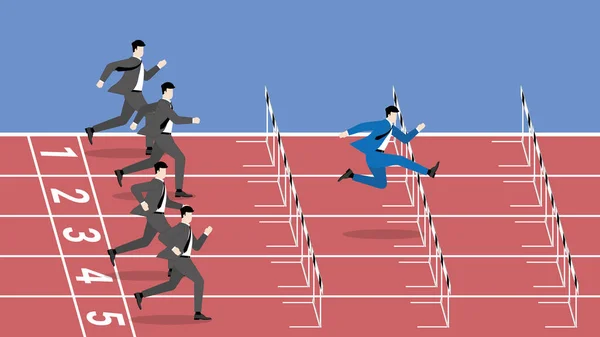
You were at the same show. The same floor. The same buyers.
But your competitor left with something you didn't: a clear record of every conversation, every objection, every buying signal and a plan to act on all of it before you've even finished writing up your notes.
This isn't about who had the better booth or the flashier demo. It's about who captured the intelligence the event was already generating and who let it walk out the door.
Every Event Is a Competitive Intelligence Goldmine. Most Companies Mine Almost None of It.
Trade shows and hosted buyer events are unusually rich information environments. In the span of two or three days, your reps talk to dozens of qualified buyers who will tell you, often in remarkable detail, exactly what they need, what they've tried, what hasn't worked, which competitors they're evaluating, and what would make them buy.
This is not marketing data. It's not survey data. It's an unfiltered, real-time voice of the customer, collected at the highest point of engagement in the sales cycle.
The problem is that most companies treat it like small talk.
By the time reps are back at the office, the details have blurred. Notes are incomplete. The specific language a buyer used the exact framing of their pain, the competitor name they mentioned, the budget signal they dropped in passing is gone. Research on the forgetting curve shows that 50% of new information is forgotten within an hour, and up to 90% within a week. In a back-to-back meeting environment, that window shrinks even further.
Your competitor, if they're smart, has already solved this. And the gap between what they know and what you know gets wider every event they attend.
The Three Layers of Intelligence Most Teams Miss
The competitive gap isn't just about who followed up faster. It runs deeper than that. There are three distinct layers of event intelligence that go uncaptured for most teams and each one compounds the disadvantage.
1. Buyer Language
The most underrated asset in any sales conversation is the exact words a buyer uses to describe their problem. Not a paraphrase. Not your rep's interpretation. The actual language.
"We're drowning in manual reconciliation" is more valuable than "they have a process problem." It tells you how to write the follow-up email, how to frame the pitch, and potentially how to position your product in marketing materials. When that language isn't captured, it's replaced by a rep's summary which filters out precisely the nuance that makes it useful.
2. Competitor Mentions
Buyers talk about your competitors constantly at events often without being asked. They'll mention who they're currently using, who they're evaluating, what they heard about a competitor's pricing, or where a competitor fell short. This is free competitive research, delivered directly to your rep in the middle of a 1:1 meeting.
But if your rep doesn't write it down immediately and in the flow of a scheduled meeting, they usually don't it's gone. Meanwhile, a competitor with structured conversation capture is building a database of exactly where they're being mentioned, in what context, and with what sentiment. As the Enterprise Sponsor's Playbook puts it, that kind of data lets you see not just that a competitor was mentioned 22 times across the event, but specifically in what context and where their vulnerabilities are.
3. Objection Patterns
One rep hearing an objection is anecdotal. Ten reps hearing the same objection across 40 meetings is a signal. The difference between those two outcomes is whether the data gets collected and aggregated or stays locked in individual memory.
Teams that capture every conversation can surface the objections that are showing up most frequently across the event, adjust their messaging in real time, and walk away with a coaching brief that makes the next event sharper. Teams that don't are flying blind, event after event.
What the Gap Looks Like in Practice
Here's how the same event plays out for two different exhibitors.
Exhibitor A relies on their reps to take notes between meetings. By day two, the notes are inconsistent some reps write detailed summaries, others write names and a few keywords. By day three, the floor is busy and note-taking stops almost entirely. After the show, the team spends two days trying to reconstruct conversations and enter leads manually into the CRM. About 20% of conversation details actually make it in. The rest is lost.
Exhibitor B has every 1:1 meeting automatically recorded and transcribed. By end of day one, their manager is running a ten-minute debrief using the previous day's AI-generated meeting data flagging the top objection that surfaced across all conversations, identifying the two highest-intent buyers, and sharing a clip of how one rep handled a pricing question. On day two, the whole team adjusts their approach based on real data. By the time the show ends, 100% of leads are in the CRM, enriched with full context, and follow-up emails have already gone out while Exhibitor A's team is still at the airport.
The show was identical. The intelligence gap was enormous.
The Morning Huddle Advantage
One of the most concrete ways the competitive gap manifests is in how teams use the downtime between event days.
Most teams use it to decompress. The best teams use it to compound their advantage.
With structured conversation data, a 10-minute morning huddle can surface:
- The objection that came up most across yesterday's meetings so every rep can handle it better today
- The buyer signals that indicate high intent so the right conversations get prioritized
- The competitor mentions that are trending so the team knows what they're up against in real time
- The rep whose approach is working so the whole team can model it
Without that data, the morning huddle is a pep talk. With it, it's a competitive briefing.
This is the kind of real-time intelligence loop that the Enterprise Sponsor's Playbook describes as the difference between showing up to day two with a guess and showing up with a strategy.
Why This Gap Is Widening
A few years ago, the competitive intelligence gap at events was mostly a function of how diligent individual reps were. The best note-takers got the best data. Everyone else got fragments.
That's no longer the constraint. The tools to capture, transcribe, and analyze every conversation automatically now exist and are specifically designed for the noise, pace, and structure of trade show and hosted buyer environments. The Backtrack platform was built precisely for this the tightly scheduled, high-volume meeting environments where generic office tools fail and human memory is simply not fast enough.
The companies that have adopted structured conversation capture are accumulating a compounding advantage: not just better follow-ups from the last event, but a growing dataset of buyer language, objection patterns, and competitive signals that sharpens every event they attend.
The companies that haven't are starting from scratch every time.
Turning Event Intelligence Into a Competitive Moat
The practical implication is straightforward. Every 1:1 meeting your team has at an event is either an asset or a missed opportunity and the difference comes down to whether it gets captured.
When it does, the outcomes stack up:
- Follow-ups that use the buyer's own language, because the transcript captures exactly what they said
- CRM records that are complete and actionable, not reconstructed from memory days later
- Coaching briefs built from real conversations, not manager assumptions
- Competitive reports that show where your brand is winning and losing grounded in what buyers actually said
- A rebooking case built on measurable pipeline, not just "good conversations"
When it doesn't, the advantage transfers to whoever in your competitive set figured this out first.
The Backtrack dashboard makes this intelligence visible at both the individual meeting level and across the full event so teams aren't just capturing data, they're acting on it in real time.
Are You Leaving Your Leads on the Table?
Every event your team attends is generating a stream of competitive intelligence. Buyers are telling you what they need, what they're evaluating, where your competitors are weak, and what would make them move forward.
The only question is whether you're capturing it or leaving it for someone else.
Your competitors were at the same show. The question isn't whether the intelligence was there. It's whether they heard it, and you didn't.
Want to see how Backtrack captures and structures every conversation at your next event? Get in touch.
.svg)
Backtrack is an AI-powered platform that automatically records every 1:1 meeting, generates accurate transcripts and CRM-ready notes, and delivers ROI reports sponsors can use as proof—so organizers can drive rebooks with data, not vibes—across trade shows, hosted buyer events, and other 1:1 meeting programs.